See image — IUPAC and Nomenclature Chemistry Question
Question
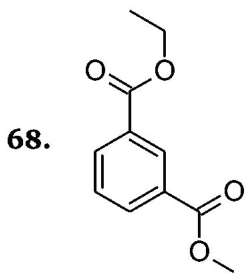
See image
💡 Solution & Explanation
Step 1 – Identify the parent chain/ring: The compound contains a benzene ring as the core structure, so the parent name is 'benzene'. Step 2 – Identify the substituents: There are two carboxylate ester groups attached to the benzene ring. One ester group is -C(=O)-O-CH2CH3 (an ethyl ester, i.e., ethoxycarbonyl) and the other is -C(=O)-O-CH3 (a methyl ester, i.e., methoxycarbonyl). Step 3 – Determine positions: Both ester groups are on the benzene ring in a 1,3 (meta) relationship, as shown by the structural drawing. Step 4 – Apply IUPAC nomenclature for esters of dicarboxylic acids: The parent diacid would be benzene-1,3-dicarboxylic acid (isophthalic acid). When both carboxylic acids are esterified—one with ethanol and one with methanol—the compound is named as a diester. The two alcohol-derived portions are named first (ethyl and methyl), followed by the acid-derived portion (benzene-1,3-dicarboxylate). Step 5 – Assemble the name: Listing the alkyl groups alphabetically (ethyl before methyl), the full IUPAC name is ethyl methyl benzene-1,3-dicarboxylate. Step 6 – Why no other name applies: The compound is not a symmetric diester (which would be diethyl or dimethyl), and the two ester groups are meta (1,3), not ortho (1,2) or para (1,4), ruling out phthalate or terephthalate nomenclature. Therefore, the correct answer is ethyl methyl benzene-1,3-dicarboxylate.